What is the relationship between the unconscious, the subconscious, and emotions?
When we say “I am,” something deep within us asserts itself, recognizes itself, and feels alive. This “I am” is not just a mental expression but a real vibration, a center of presence. We feel this presence in the solar plexus, where life pulses instinctively, and then in the heart, where presence becomes self-awareness. But this consciousness is not our entire being. It is only the visible tip of a much vaster inner mountain, which includes the subconscious and the unconscious.
The unconscious is the deepest layer of our psychic being. It is where the seeds of collective human experience, inherited reaction patterns, primordial instincts, unexpressed impulses, and, often, unresolved traumas of our ancestors and past lives lie. It is a formless area, but full of potential. It is the fertile darkness from which thoughts, dreams, and impulses emerge and then take shape in the higher planes.
The subconscious, on the other hand, is a layer closer to the surface. It is the realm where our personal experiences, impressions, emotions, and repetitive reactions accumulate and form a kind of “living memory.” The subconscious contains all the mental images, all the thoughts accompanied by desire, and all the fears and desires we have experienced but not fully processed. Every powerful thought accompanied by desire becomes an elemental—a form of energy that feeds on the ether of our material body and remains active, influencing our decisions, reactions, and even our health.
Emotions, in this context, are the visible sign of these hidden dynamics. They are the language through which the subconscious and, sometimes, the unconscious speak to us. An emotion such as fear does not appear out of nowhere; it is often the expression of a mental image in the subconscious that has been fueled by a desire (or trauma) and continues to vibrate deep within us. When that image is touched by an external stimulus, it is activated, sends an impulse to the conscious mind, and produces an emotional reaction.
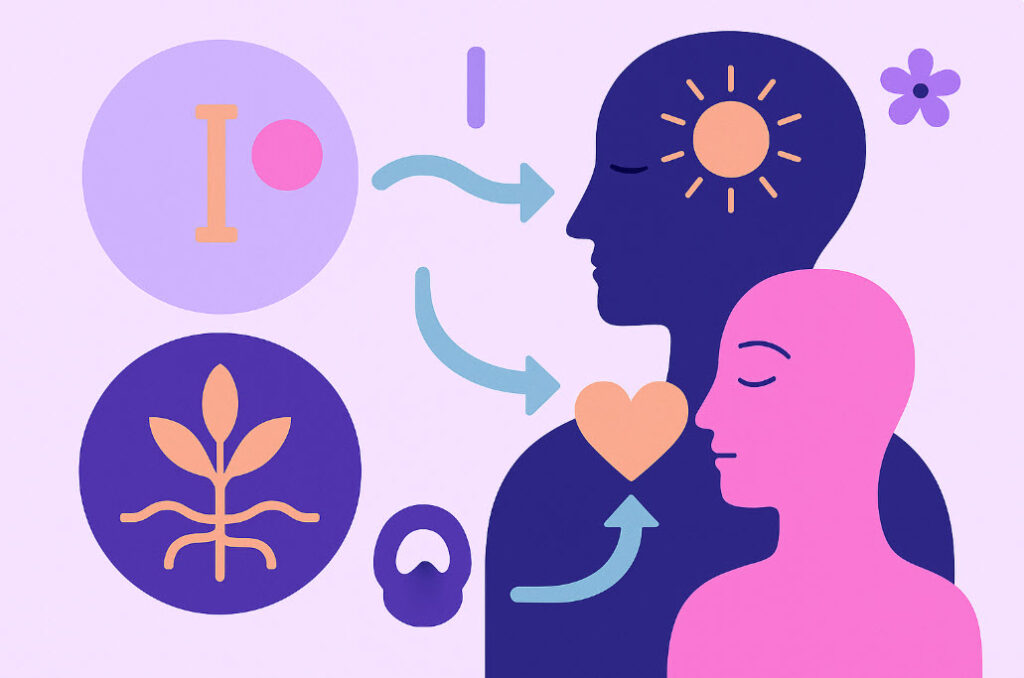
Thus, there is a deep and continuous relationship between these three layers. The unconscious is like the deep soil in which the seeds lie. The subconscious is the garden where the seeds have sprouted and taken shape. Emotions are the flowers or weeds that have grown and appear on the surface, sometimes without us knowing what gave birth to them.
To understand ourselves, it is not enough to analyze only what we feel on the surface. We need to descend into the subconscious to observe the mental formations that exist there—those elementals that have formed from our repeated desires and thoughts. Further, we can go even deeper, into the unconscious, to understand why those desires arose, what traumas or instincts underlie them, and what inherited patterns have fed them.
Cleaning up the subconscious becomes really important. Through introspection, meditation, and honest observation, we start to bring these mental images to light, look at them with discernment, free them from the energy of uncontrolled desire, and, if necessary, replace them with new, bright formations called angelic elementals. These new elementals, consciously created through clear thinking and pure intention, become instruments of inner healing and spiritual transformation.
Ultimately, we can say that emotions are the bridge between the conscious and the subconscious, and the subconscious is the gateway between our current personality and the deep forces of the unconscious. When we begin to truly feel this living chain between the depths and the surface, we become more than reactions and desires—we become conscious creators of our own being.